
Curriculum
What a screen-free homeschool curriculum actually means
A screen-free curriculum is one where the teaching happens between a parent, a book and a pencil rather than between a child and a video. Faith Schooling is built that way, and every browser it still uses is named below.
Updated 4 October 2026
What does "screen-free homeschool curriculum" mean?
A screen-free homeschool curriculum is one where instruction happens between a parent, a printed page and a pencil, rather than between a child and a video, an app or an animated character. Delivery and instruction are different things: nearly every curriculum is downloaded on a computer, and what matters is whether the child then works printed pages taught by a person, or is taught by software.
Programs using the phrase vary. Some ship bound books, some are print-ready PDFs, and some are paper with a video component the publisher calls optional while the daily plan quietly assumes it. The answer is in the daily lesson rather than the sales page.
Is Faith Schooling a screen-free curriculum?
The teaching is. Every Faith Schooling curriculum is a print-ready PDF, the parent teaches from a written guide, and no lesson requires a child to watch a video or be taught by an animated character. There are no video lessons in the program.
That is why it exists, rather than a feature added afterwards. Faith Schooling was founded by Tyler, a Christian father, homeschool parent, farmer and Air Force veteran in Wisconsin. The About page records that many programs he looked at still leaned heavily on screens, videos and entertainment, and that he wanted books on the table, pencils in children's hands and parents actively teaching instead. That is experience, not an academic credential, and the About page says so itself.
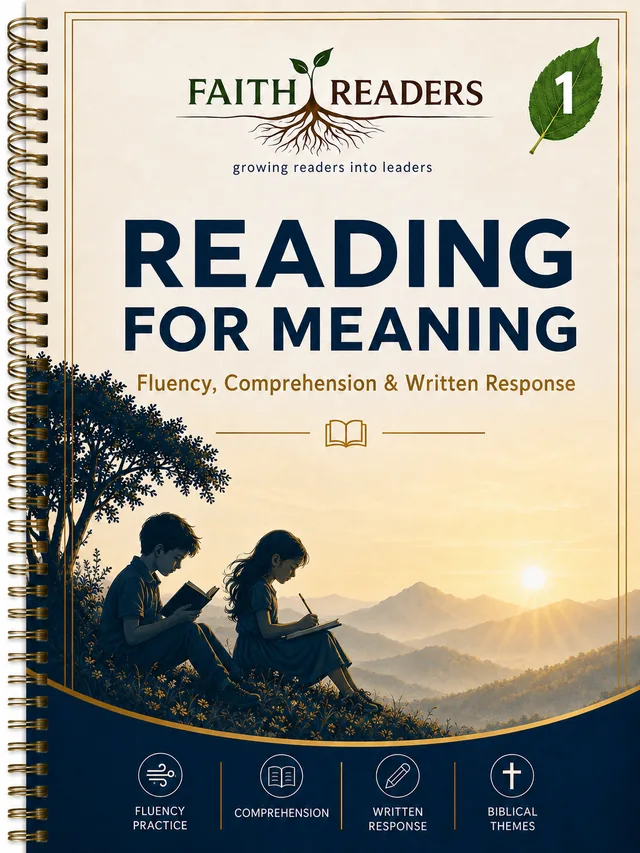
In practice, reading runs K-5 as six full-year student textbooks, 8,952 student pages with 3,530 pages of teaching guide, or as 210 weekly lesson sets carrying the same sequence a week at a time. A complete reading lesson is a 45 to 55 minute adult-led block, and the child's own written work is recorded at five pages and 10 to 15 minutes a day across all 1,050 daily weekly-set lessons. Building Number Sense is a complete K-5 student-text sequence, with coordinated workbooks and teaching guides through Grade 2 and the Math Practice Library carrying Grades 3 to 5. Learning Cursive, Foundations to Fluency and 300 decodable readers and fluency passages sit alongside them. All of it prints.
Where the browser is still used, named plainly
There are screens on this site, so here is the whole list rather than a claim you would have to take on trust.
HARVEST, the reading placement, runs in a browser, takes about 20 minutes for the reading portion, uploads nothing and ends in a printable report. It is optional: the same page offers a two-minute chooser that names your first books with no assessment at all. Three browser games exist, and the games page calls them, in its own words, practice that reinforces what a program teaches and is not the lesson. Parent tools such as the Copywork Creator and the Bible Verse Card Maker run in a browser too, but each produces a printable.
One exception involves the adult rather than the child. The complete teaching guides for the reading textbooks and for Building Number Sense are read online page by page; the clean teacher PDF is never exposed and there is no teacher-edition download. If you want the adult's instructions on paper, the weekly format is the answer, because each set prints a seven-page preceptor guide alongside its 25 student pages. Free Apostolic Academy material can be read online or downloaded and printed. Buying the curriculum needs a computer and a printer, as with any print-at-home publisher.
How do I run a year with no screen in front of my child?
Start with the two-minute chooser on the HARVEST page rather than the assessment; it names the first reading book, math book and practice pages without seating a child at a screen. If you want the skill-by-skill picture, work through HARVEST yourself and print the report.
Then print, either four quarter volumes a grade so binding is manageable, or the weekly format, about 25 pages plus the guide each Friday. Skip the games; every program page lists what you actually need, which is paper, a printer and a pencil.
For the hours away from the table, the free Faith Readers Originals include eight nature study kits and thirty-one outdoor project sheets: paper, a pencil and the outdoors.
What does print-first cost you?
Printing is real work and real ink, and the page counts are published before you print rather than after. The Kindergarten reading textbook is 1,282 student pages across four quarter volumes; the weekly format is about 25 student pages a week instead. Kindergarten math is a 40-page student text with a 54-page workbook, and Learning Cursive is 170 pages. Many families print a quarter at a time, or send a quarter volume to a print shop to be bound.
All Access is $39 a month, cancel anytime, covering every grade K-5 and every child in one household. Placement, every teaching guide, eight sample pages of each grade book, the first workbook of every Foundations level and the first three sheets in every practice set cost nothing, so you can read real pages before paying.
Look elsewhere if
You want bound books delivered. Faith Schooling publishes print-at-home PDFs and does not ship a printed edition. If a box of books arriving each August is what you want, buy from a publisher that ships one.
You want the parent's teaching guide on paper for the textbook line. It is read in the browser page by page, with no teacher-edition download. The weekly lesson format is the print-first alternative.
You want a child who works independently. This is parent-taught by design, and the catalog records adult help as high on every Kindergarten and Grade 1 lesson, medium in Grades 2 and 3, low in Grades 4 and 5. A screen-free program means an adult does what the screen would have done.
You want enrollment, grading or accreditation. Faith Schooling is an independent curriculum publisher rather than a school, and you keep your own records.
You want a secular program. These materials are written from Christian and Apostolic conviction with the Bible treated as final authority, and Scripture and Christian character are the content of the lessons rather than a border around them.
Common questions
- Does my child ever have to use a computer?
- No. Nothing in the reading, math, phonics or handwriting sequence requires a child to use a screen, and there are no video lessons in the program. The browser-based things on this site are the HARVEST placement, three practice games and a set of parent tools, all optional and separate from the teaching. A child can work a full year on printed pages with a parent.
- Do I have to print everything myself?
- Yes. The curriculum is print-ready PDFs, so you print at home or at a print shop; Faith Schooling does not ship bound books. Page counts are published before you print: a reading grade comes as four quarter volumes, the weekly format is about 25 student pages plus a seven-page preceptor guide each week, and Learning Cursive is 170 pages in total.
- Are the learning games part of the curriculum?
- No. Phonics Builder, Grammar Garden and Faith Thinkers are short review between lessons, and the games page says plainly that they reinforce what a program teaches and are not the lesson. Every program page lists what you need in order to teach it, and a game is never on that list. Families who want no screens skip them.
- Can I place my child without the online assessment?
- Yes. The HARVEST page has a two-minute chooser: pick the grade your child is in now and it names the reading book, math book and practice pages to open first, with no assessment needed. If you want skill-by-skill detail, HARVEST takes about 20 minutes for the reading portion, runs in your browser, uploads nothing and prints a report, and you can work through it yourself rather than seating a child at a screen.
- Why is the teaching guide only readable online?
- For the reading textbooks and Building Number Sense the complete teaching guide is readable page by page in the browser, and the clean teacher PDF is never exposed. That is a publishing decision about the teacher edition, and it affects the adult rather than the child. If you want the adult's instructions on paper, use the weekly lesson sets, where a seven-page preceptor guide prints with each week.