Four quarterly coursebooks
Consumable Student Coursebooks, one per quarter, carrying the five-day weekly rhythm from Learn & Notice to Write & Show.

Grammar Garden · Dedicated Language & Writing Curriculum · K–5
Grammar that grows into writing
A complete K–5 language and writing curriculum built for children who learn best by using what they learn. Grammar Garden grows from sentence sense and grammar into editing, revision, and real composition through guided practice, cumulative review, and repeated application — so grammar becomes usable written language rather than a list of terms to memorize.
 K–5language & writing
Grammar Garden · Language & writing curriculum
Dedicated language & writing curriculum · Who it is for
Grammar Garden is the dedicated K–5 language and writing pathway. The reading curriculum carries language arts within it; Grammar Garden takes the writing side further and deeper, and the two run naturally side by side.
Want the full picture? See the side-by-side comparison and the Faith Schooling strengths that matter at the kitchen table.
A transparent curriculum presentation
Every grade shows its real covers, its full 36-week scope and sequence generated from the curriculum’s own skill registry, the complete Preceptor Guide readable online, and substantial sample pages chosen to show real teaching.
Consumable Student Coursebooks, one per quarter, carrying the five-day weekly rhythm from Learn & Notice to Write & Show.
The yearlong Preceptor Guide for every grade reads online, page by page, before enrollment — scripting, answers in context, and pacing.
An entry diagnostic, quarterly benchmarks with scoring guidance, per-skill reteach cards, and anchor charts — in a dedicated Assessment & Resource Book.
Taught skills deliberately return — in review, in editing passages, in composition — because a rule used three weeks later is the only rule truly learned.
Kindergarten through Grade 5
Every grade page provides the covers, the skills, the complete component list, the full 36-week scope, and eight hand-picked coursebook previews.
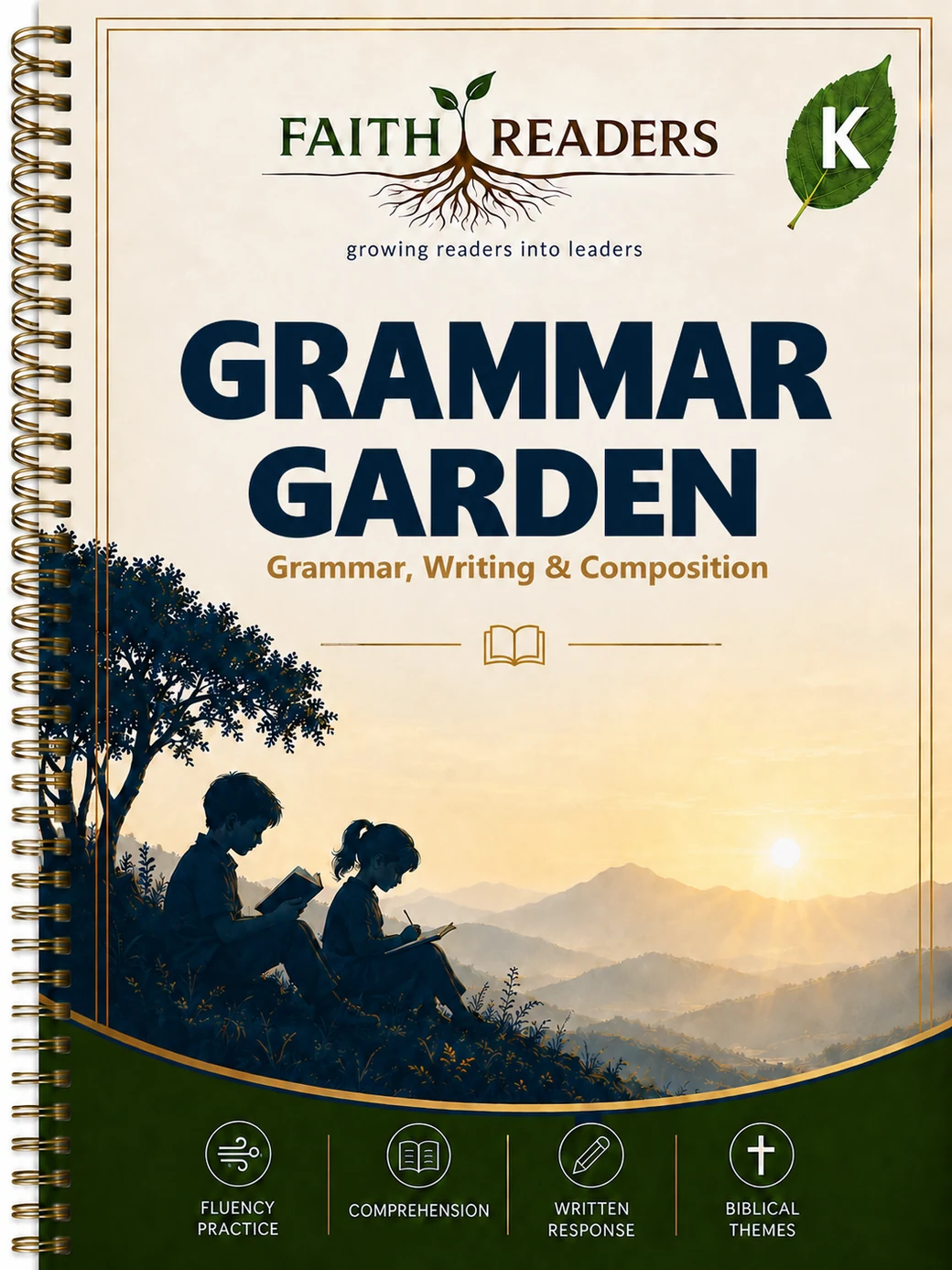
Kindergarten
Kindergarten is oral, shared, and tactile: children learn to tell a whole idea from a piece, meet capitals, spaces, and end marks, and move from drawing and telling into their first written sentences.

Grade 1
Formal work begins gently: sentence or not a sentence, nouns and verbs and adjectives met inside real sentences, verbs that tell about now and before, and ideas joined into small true stories.
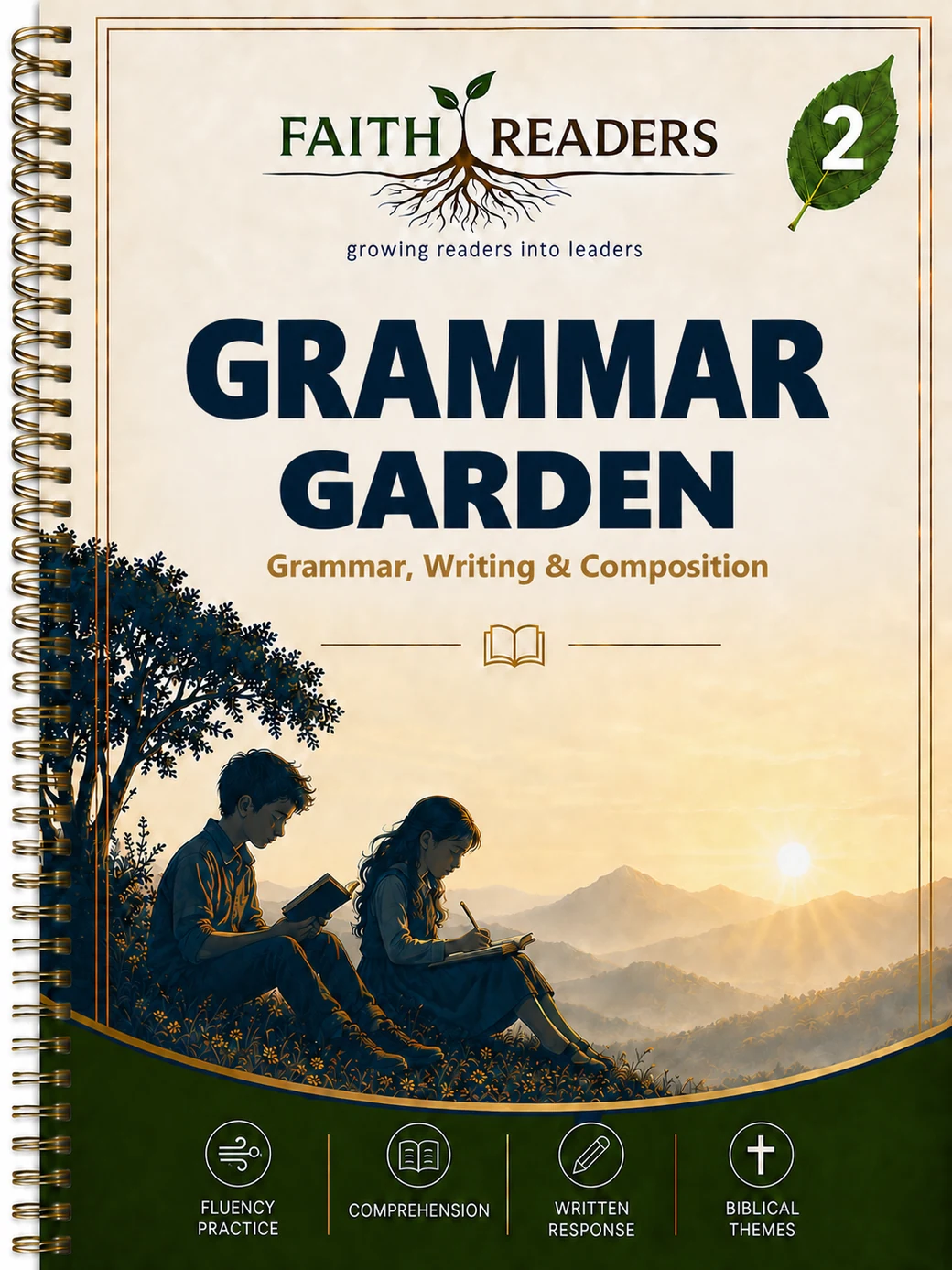
Grade 2
Sentences get anatomy — subjects and predicates underlined and built — verbs learn to stay in one time, prepositional phrases arrive with their commas, and writing turns toward exact nouns, vivid verbs, and first full paragraphs.
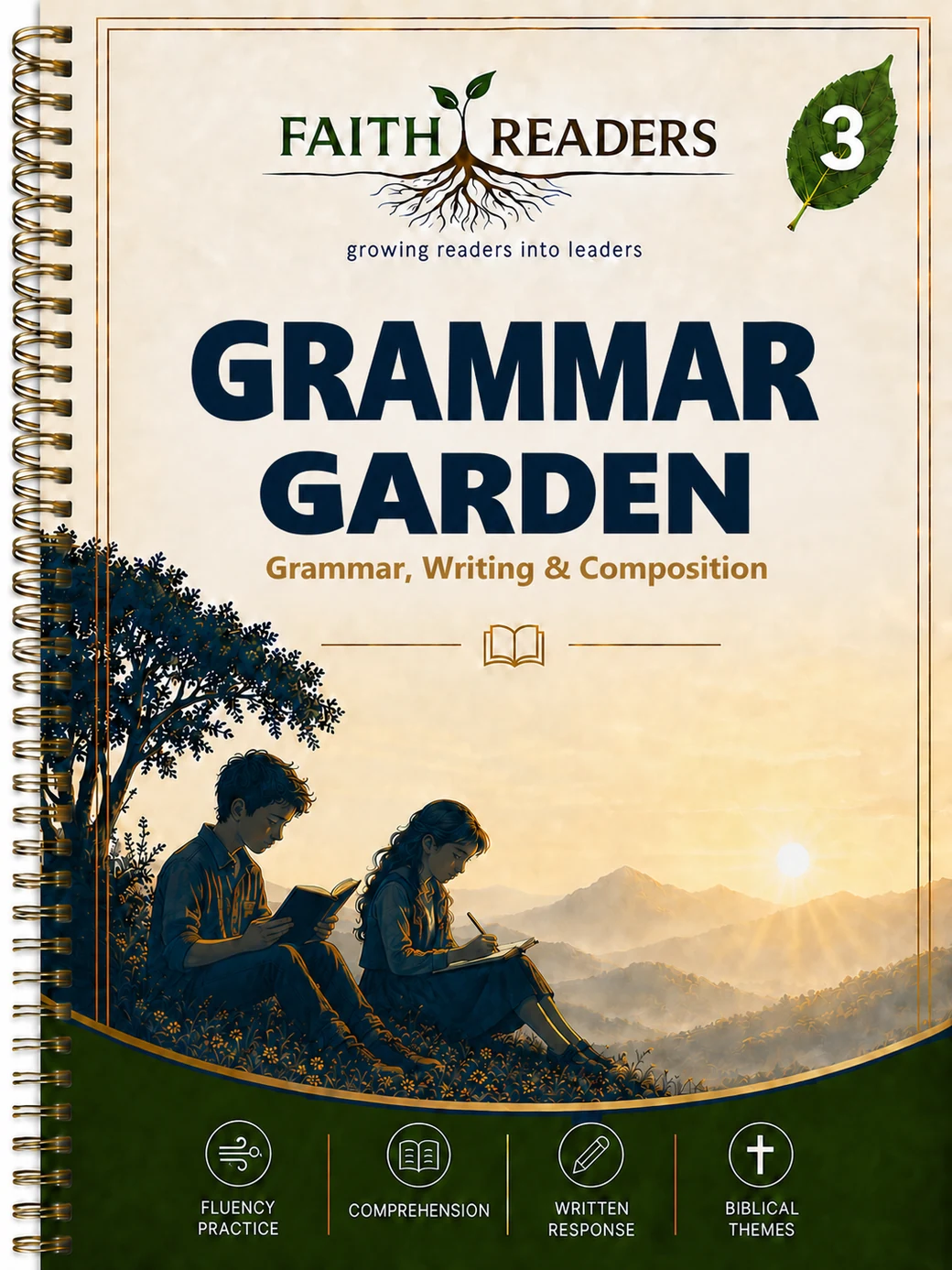
Grade 3
Pronouns and their antecedents, compound and complex sentences with the commas they demand, dialogue punctuated properly, and paragraphs that hold together — then revision taught as its own skill, not a vague instruction.

Grade 4
The clause becomes the working unit: phrase versus clause, simple to compound to complex, fragments and run-ons repaired on sight — then objects and complements, the progressive tenses, well-placed modifiers, and writing with transitions and brief source use.
Grade 5
The grammar matures into style: perfect tenses measured against a second moment, sentence rhythm varied on purpose, formal and informal register chosen for the room, and summary, paraphrase, and honest source use taught before middle school asks for them.
Faith Schooling All Access
Inspect every grade, read the complete Preceptor Guides, and preview the actual work. All Access opens every coursebook, assessment book, and reference booklet here — alongside the reading and math curricula and the practice library.
Use the arrow keys to change pages. Click the page or use the controls to zoom. On a touchscreen, pinch to zoom and drag to pan.