
Curriculum
Homeschool placement tests and skill checklists
A placement test tells you where to start. A skill checklist tells you what should already be secure. Used together they replace guessing about grade level.
Updated 4 October 2026 · Sources read 31 August to 5 September 2026
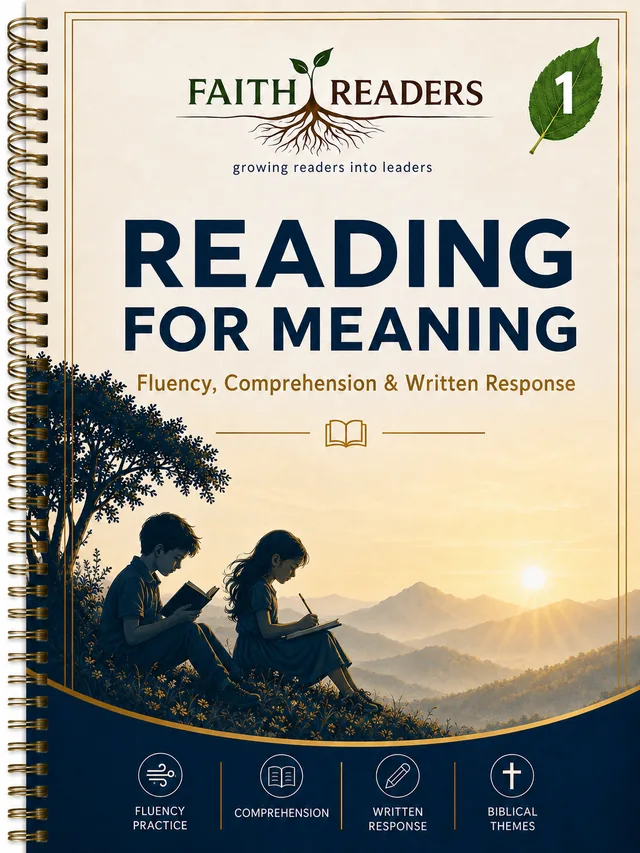
What a homeschool placement test does
A homeschool placement test answers one question: where in a program should this child begin? It is not a diagnosis, a grade report or an achievement test. A good one is short, adaptive — so it skips what a child has clearly mastered — and it ends by naming a specific starting point with the reasoning behind it, rather than a score you then have to interpret alone.
This matters because age and grade are poor guides. A child can decode fluently and spell poorly, or read accurately and understand little. A placement check separates those strands so you buy and teach the right thing.
A skill checklist does the opposite job. Instead of testing a child, it lists what a stage requires, so an adult can read down the list and see what is secure, what is shaky and what has never been taught.
HARVEST: the reading placement, open to everyone
HARVEST is Faith Schooling's reading placement assessment. It takes about 20 minutes for the core reading scope — longer only if you choose a wider scope — adapts as you go, runs entirely in your browser, and produces a printable report. Nothing is uploaded: the questions, the scoring and the report stay on your device, and it is open to everyone.
It works through seven sections, in the order reading skills develop — from the ear, through the eye, to the voice.
- Phonemic awareness — rhyme, blending and segmenting spoken sounds.
- Letter names and sounds — naming each letter and producing its primary sound.
- Decoding — short vowels, blends, digraphs and long vowels, routed adaptively.
- Sight words — high-frequency words met before they can be fully decoded.
- Encoding — spelling what you hear, the dictation side of phonics.
- Fluency — words correct per minute on a levelled passage.
- Comprehension — short questions about what the child has just read.
What HARVEST cannot tell you
Its math result is a grade, not a starting lesson. The Math Only check, about 15 minutes, gives a math grade estimate and points to the matching Building Number Sense grade, but not a week or lesson within it. Confirm the grade by inspection: every Building Number Sense grade page shows eight hand-picked sample pages, and the Kindergarten through Grade 2 teaching guides can be read in full, so an adult can see the real level of the work before choosing a grade.
It is also guidance rather than a diagnostic. The Terms state that its scoring and recommended starting level are informational guidance, not a diagnostic, and the assessment itself states that it does not diagnose learning disabilities. If you have concerns about a child's progress, that is a conversation for a qualified educator or clinician.
And it is a snapshot. Re-running it after about eight weeks is the honest way to see whether the placement held and whether the work is moving.
Free homeschool placement tests, compared
Most Christian homeschool publishers offer some way to choose a starting level, and most of them are free. They differ in what is measured, how much of the marking falls to the parent, and whether the result names a starting point or only a grade.
Each row was read on the publisher's own site on September 5, 2026. Publishers change what they offer, so check before you decide. "Not published on their site" means we could not find it, not that it does not exist. Every one of these tests, ours included, places a child into that publisher's own sequence, not into anyone else's.
| Publisher | Placement-test format | Cost | Does it score itself? |
|---|---|---|---|
| Faith Schooling — HARVEST | Adaptive assessment taken in your browser. Reading takes about 20 minutes; writing, math and reasoning can be added. Nothing is uploaded. | Free | Yes. Scores itself instantly and names the grade and quarter to start in, in a printable report. |
| Abeka | No placement test published on their site. Their getting-started page tells parents to use the free Scope & Sequence to choose a grade. Iowa and Stanford achievement tests are sold separately, for measuring progress rather than placing a child. | Scope & Sequence free; achievement tests sold separately | No placement test to score. |
| BJU Press Homeschool | A skills-assessments page holding several tools: online math skills assessments for Grades 1–11, informal reading assessments the parent gives by ear (oral and silent reading, miscues, comprehension questions), and a Phonics Progress Monitoring Tool. Their page calls these tools to guide instruction, not exact measures of ability. | Free | The online math assessments do: each reports a percentage against score bands with a recommendation about moving on. The reading assessments are given and judged by the parent. |
| The Good and the Beautiful | Printable PDF placement tests for language arts, reading, spelling and math. | Free | No. The parent gives the test and judges the result. |
| Master Books | A downloadable placement assessment for each of its language arts and math courses, opened from their assessment page. | Free | No. Each one opens as a PDF for the parent to give. |
| Easy Peasy All-in-One | An online placement test for Kindergarten through Grade 8 covering math, reading and language arts, then per-subject placement guides for fine-tuning the result. Their page says it is for families new to Easy Peasy and is not meant to assess progress afterwards. | Free | Their page says the test shows their suggestions for math, reading and language arts; the guides are for adjusting them afterwards. |
Checklists you can print now
Faith Schooling publishes a small set of short printables through the Apostolic Academy, free and open to everyone. Four of them do checklist work in the ordinary sense: print them, read down them, decide something.
| Printable | What it is for | Length |
|---|---|---|
| Kindergarten Readiness Checklist | What kindergarten readiness actually requires | 2 pages |
| Christian School Evaluation Checklist | Questions to take on a school tour that reveal what a school teaches | 4 pages |
| Homeschool Curriculum Comparison Worksheet | One sheet per subject for evaluating any publisher, including this one | 3 pages |
| A Reading Routine That Works | A one-page weekly reading routine and the two rules that matter most | 1 page |
Kindergarten Readiness Checklist Homeschool Curriculum Comparison Worksheet Christian School Evaluation Checklist All free printables
Using a scope and sequence as your skill checklist
There is no single downloadable K–5 skill checklist here, and inventing one would be less useful than what already exists. Two published resources do the same work better.
The first is the scope and sequence printed on every reading grade page: 35 weeks per grade, each showing the skill taught, the focus words, the sight words, the Bible hero, the virtue and the Scripture. Reading down a grade's table tells you what a child at that level is being asked to do, week by week.
The second is the learning path at /learn/, which sets out four sequences in order: learning to read, math practice, reading, grammar and language practice, and early learning and handwriting. Each step explains what the skill is, the readiness signs to look for, the mistake it commonly produces, and the mastery check that says it is secure — which is exactly how a checklist is meant to be used.
The learning path, skill by skill Grade 1 scope and sequence Letter sounds Spelling
How mastery is judged once you have started
Placement gets you to the right starting line; a mastery rule keeps a child from being moved on too early. Inside the Faith Schooling programs a skill counts as mastered when the child demonstrates it at 90% or better across five or more sessions on different days. That is tracked with daily exit tickets, weekly mastery checks that use parallel forms so a retest is not the same questions, timed drill sheets with personal-best tracking, and a skill ledger in one place.
The practical effect is that the calendar stops being the pacing device. A child who needs three more weeks on blends gets them; a child who has blends secure in four days moves on.
Is this the right approach for your family?
It fits a family that wants to place a child honestly, keep its own records, and teach from a script. Everything named above — the placement, the printable checklists, the learning path, the scope and sequence tables, the reading teaching guides and the first three sheets in every practice set — is open to everyone with no membership.
HARVEST is a free, private placement tool for choosing the right Faith Schooling reading starting point. Families keep their own grades and records and add any standardized achievement test, evaluator report, or formal certification required by their state or umbrella program.
How we compare with other publishers Frequently asked questions
Common questions
- Is HARVEST really free, and what does it need?
- It is open to everyone. HARVEST runs entirely in your browser: the questions, scoring and final report stay on your device and are never uploaded, so Faith Schooling does not see or store a child's answers. If you want the report kept, you print or download the PDF yourself; the site states plainly that it does not see, store or receive the results.
- How long does a placement assessment take?
- About 20 minutes for HARVEST's core reading scope, sitting with your child, and longer only if you choose a wider scope. It is adaptive, so items a child has clearly mastered are skipped. Progress saves locally and a paused session can be resumed within 24 hours, which means you can stop partway rather than pushing a tired child through the whole thing in one sitting.
- Is there a math placement test?
- Yes. HARVEST's Math Only check takes about 15 minutes and covers number sense, operations, place value, math vocabulary and applied problems. It gives a math grade estimate and points you to the matching Building Number Sense grade. Then confirm the fit: each Building Number Sense grade page shows eight hand-picked sample pages at the real difficulty of that book, and the Kindergarten through Grade 2 teaching guides can be read in full in the browser before you join.
- What is the difference between a placement test and an achievement test?
- A placement test decides where to begin in a particular program and is usually short and adaptive. An achievement test measures performance against a wider standard. HARVEST is Faith Schooling's placement tool, and the Terms describe its scoring and recommended level as informational guidance, not a diagnostic. Check your own reporting requirements when deciding whether to add a standardized achievement test.
- How often should we re-check placement?
- About every eight weeks is a reasonable rhythm for reading, and HARVEST can simply be re-run to compare reports. Between those checks the daily exit tickets and weekly mastery checks inside the curriculum give a much finer signal, and the rule of 90% or better across five or more sessions on different days decides when a child moves on, so you rarely have to guess in the meantime.
- Do you have a printable K–5 skill checklist?
- Not as a single download, and there is a better substitute already published. Each reading grade page prints its full 35-week scope and sequence, showing the skill, focus words, sight words, Bible hero, virtue and Scripture for every week. The learning path at /learn/ lists the reading, language, handwriting and math practice skills in order, each with readiness signs and a mastery check.
Sources
- HARVEST placement page — checked 2026-08-31
- Apostolic Academy printables index — checked 2026-08-31
- Reading grade scope-and-sequence tables — checked 2026-08-31
- The learning path skill pages — checked 2026-08-31
- Terms of Service, section 9 on HARVEST — checked 2026-08-31
- Abeka (placement page) — checked 2026-09-05
- Abeka (second page read) — checked 2026-09-05
- BJU Press Homeschool (placement page) — checked 2026-09-05
- The Good and the Beautiful (placement page) — checked 2026-09-05
- Master Books (placement page) — checked 2026-09-05
- Easy Peasy All-in-One (placement page) — checked 2026-09-05